A study of grasshopper diet compared what New Zealand alpine grasshoppers were eating 50 years ago with todays meals. The Massey University biologists found that exotic weeds that were rare or absent in Canterbury mountains 50 years ago are now an important part of the diet of native grasshoppers.
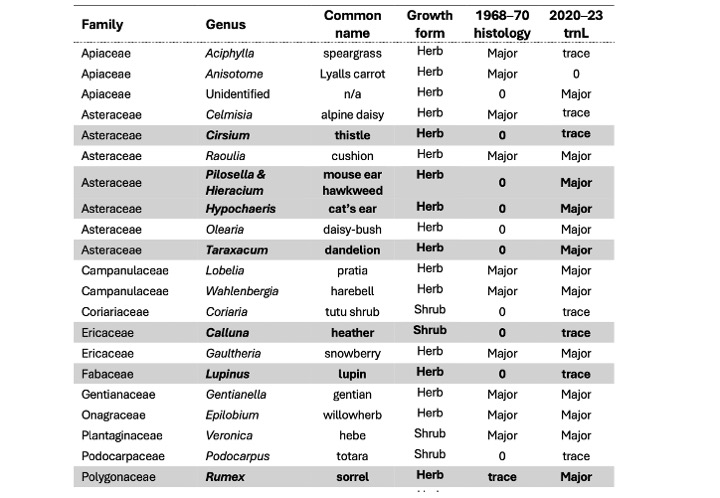
None of the alpine grasshoppers studied liked eating tussock despite it being the most common plant in their environment. The grasshoppers preferred to eat soft weeds such as hawkweed, catsear, sheep sorrel and false dandelion – new plants spreading into New Zealand high country during the last 50 years.
The food eaten by three species of grasshopper was studied using microscopic examination of plant fragments and DNA sequencing. Both methods showed that grasshoppers select soft herbs and avoid the tough tussock and spiky speargrass of the mountains. In the 1970’s the grasshoppers ate lots of native herbs, but these days the same species of grasshoppers are eating more weed species. By eating flowers, fruit and leaves of soft plants the grasshoppers are helping the tussock plants have space to establish – ensuring New Zealand mountains continue to be covered in snow tussock.
Māwhitiwhiti Aotearoa
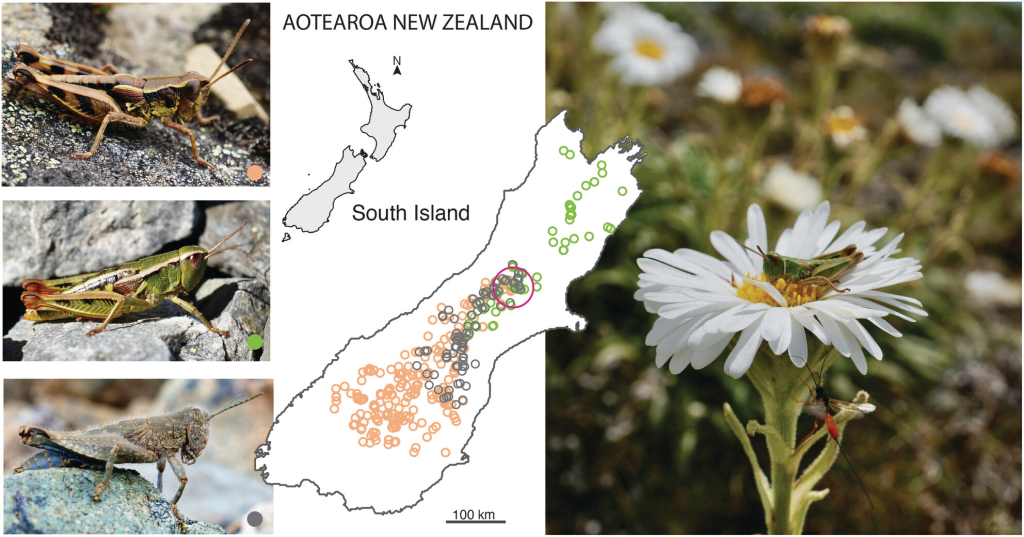
The flightless and silent grasshoppers studied were three species of the endemic genus Sigaus. Thirteen species evolved in New Zealand and live primarily in the alpine zones of Kā Tiritiri o te Moana the Southern Alps. They are under threat from habitat loss due to anthropogenic climate change.
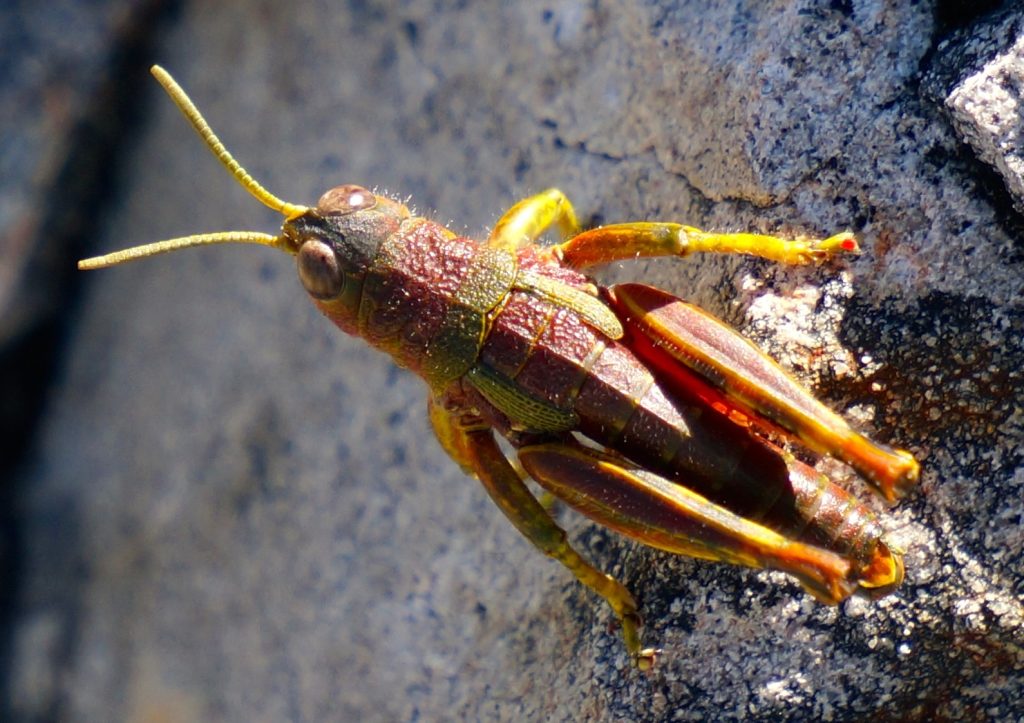
The plants that are new to New Zealand mountains have become major components of the diet of endemic grasshoppers