As Associate Professor in the School of English and Media Studies and accomplished playwright, Dr Angie Farrow, has won the Vice-Chancellor’s Teaching Excellence Award for Sustained Commitment to Teaching Excellence and a national tertiary teaching excellence award. Watch her talking about the art of teaching at http://www.youtube.com/watch?v=bpXo_GFwJBw
Monthly Archives: September 2013
Heather Mackay: October 4th Palmerston North talk
Hi there
About 7 years ago I did 2 papers in Creative Writing, extramurally. I have recommended that course to a number of writers who are struggling a little.
I now do author-funded publishing.
At the Palmerston North City Library, on October the 4th, I will talk about publishing, and immediately afterwards will be the launch of Christine Toms’ book, Wind Down the Moon.
I hope this will be of interest to some students, and the book launch of interest to all.
All the required information is in the attached files.
Best regards,
Heather Mackay
Mackay Books.
Palmerston North Library pamphlet2 Brochure SEP 18 1418
Lecturer in Theatre Dr. Rand Hazou Interviewed on RNZ’s ‘Nights’ with Bryan Crump

The cartoon character ‘Handala’ by Palestinian Artist Naji Al-ALi.
Dr. Rand Hazou, Lecturer in Theatre, Interviewed on RNZ’s ‘Nights’ with Bryan Crump
Lecturer in Theatre, Dr. Rand Hazou was interviewed by Bryan Crump on Radio New Zealand’s ‘Nights’ which was broadcast on Monday 16 September 2013. The interview focused on the importance of theatre for refugees and asylum seekers and recounted Rand’s experience attending the production of Handala, staged by Alrowwad Theatre in Aida Refugee camp in Bethlehem, and the inspiration behind the concept of ‘Beautiful Resistance’. The interview is available online: http://www.radionz.co.nz/national/programmes/nights/audio/2569493/drama-in-dramatic-places
‘Invisible Foot’ kick-starts workplace theatre at Massey
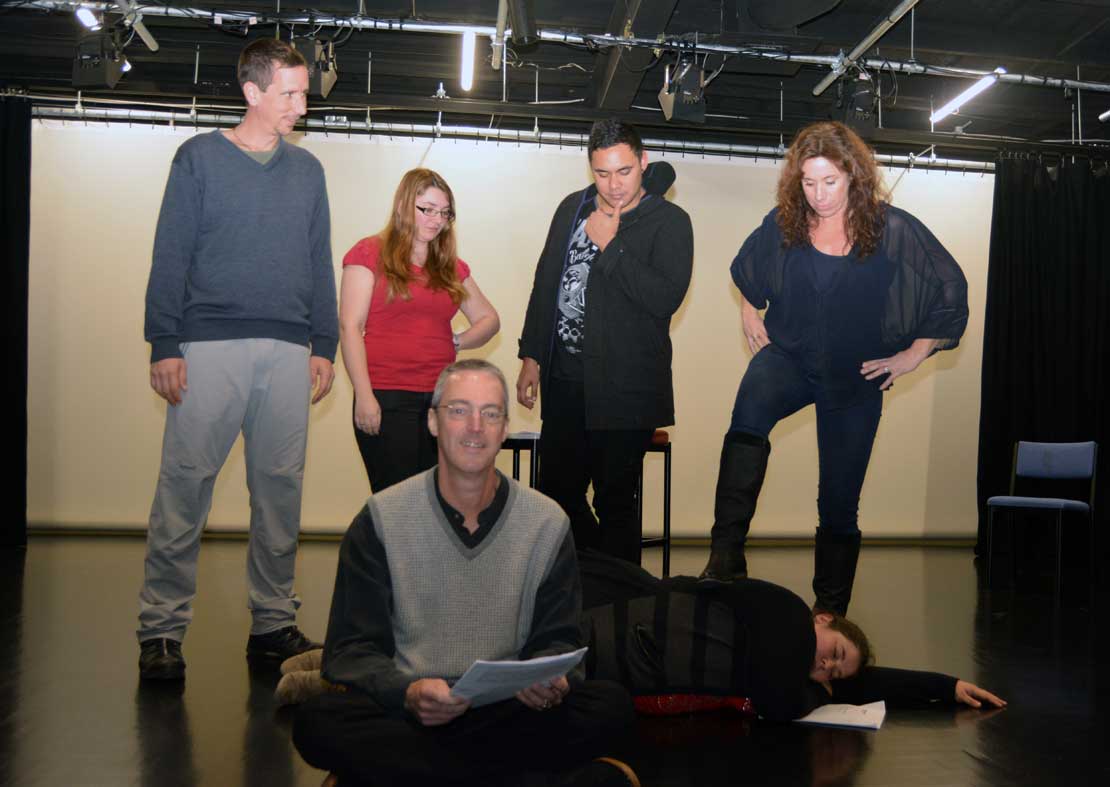
Dr Steven Taylor and poses in front of Massey theatre students acting out the final scene of The Invisible Foot’.
‘Invisible Foot’ kick-starts workplace theatre at Massey
Massey University’s theatre and business programmes came together for a unique performance last week – a reading of a play that was never meant to be performed on stage. Called The Invisible Foot, the 40-minute piece was written by business academic and playwright Associate Professor Steven Taylor, who is currently visiting Massey University with the Fulbright Specialist Programme. Dr Taylor specialises in organisational theatre – the performing of plays in workplaces to effect transformational change. While this is a relatively new concept in New Zealand, it has a long established following elsewhere, especially in Europe. The idea, he says, is to get people thinking about aspects of the world of work in a different way.
“I see the plays as a way of opening up a conversation about things that we usually take for granted or don’t think about,” he says. “My hope is that the images and metaphors in the play stick with people and provide them with a way to talk and think about aspects of their lives that they may want to change.
“For example, I’d be delighted if a year after seeing The Invisible Foot someone said at a meeting, ‘there it is, the invisible foot of the market kicking us in the backside’, and that started a different sort of conversation about what the organisation might do.”
The Invisible Foot explores the relationship between capitalism and Christianity and critiques the business world’s addiction to growth. Students from Massey’s theatre studies programme had only a few hours to familiarise themselves with the text before performing a reading of the play in the university’s new Theatre Lab performing arts space.
Dr Taylor says when his plays are performed in workplaces he usually gets “a fair amount of laughter and knowing nods” and a lot of good discussion. The spirited reading of The Invisible Foot at Massey certainly elicited plenty of chuckles from an audience who appreciated its critique of the underlying reasons for the global financial crisis. After the performance, a panel discussion with business and arts academics and industry representatives explored the uses for workplace theatre in New Zealand. Panel member and The Warehouse general manager of human resources Anna Campbell said that she believed there was a place for theatre in organisations as long as it was used pragmatically. She went on to describe how The Warehouse uses actors as a part of its customer service training programme.
“While it’s a structured training programme, the people delivering it are improvisers and actors and it’s been hugely successful. Improvisation helps staff bring very real situations to life but in a non-threatening way. It gets them to take stock and think, ‘Oh my God, we do that to our customers, that’s really shocking.’ We wouldn’t get the same results if we stood in front of them and lectured them.”
The similarities in the skill sets of actors and good leaders was also discussed, and several members of the audience shared their accounts of being mentored or “directed” by good managers and learning to “act” in leadership roles and connect authentically with others. The performance of The Invisible Foot is just one of several workshops that will be run by Dr Taylor during his month-long stay in New Zealand. He has already worked with PhD candidate Kate Blackwood to start turning her research data on workplace bullying in hospitals into a play.
“With my New Zealand workshops I hope people will come away with some idea of the possibilities of how we can use the arts in organisations – and maybe even be a little inspired to do so,” he says.
Massey senior lecturer Dr Ralph Bathurst, who secured the Fulbright scholarship to bring Dr Taylor to New Zealand, said he hopes Dr Taylor’s visit will be the first step towards Massey embracing theatre to understand and discuss organisational behaviour.
“My longer-term plan is to bring our business and theatre programmes together to offer a troupe to go into organisations and be involved in professional development,” he says. “I’d also like students to consider turning their research into a play – that’s much more accessible than a dissertation that sits on the library shelf and never gets read.”
Iranian folktales come to life at Albany
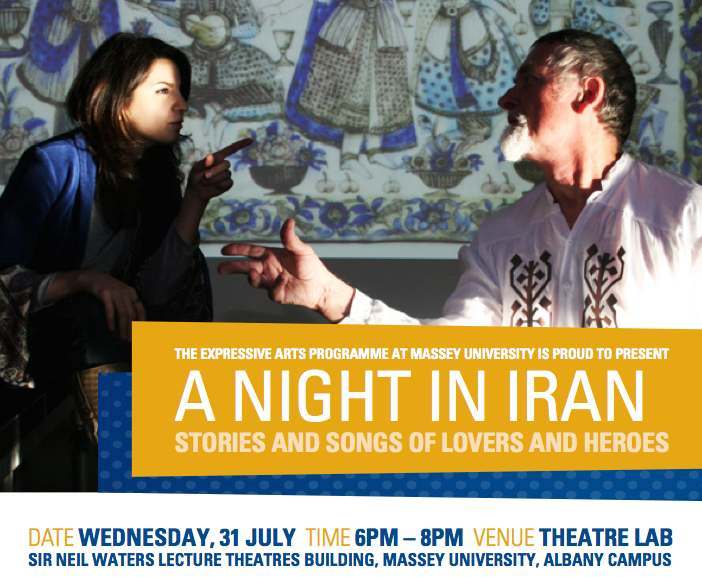
Derek Gordon and Sanam Vaziri in A Night In Iran. Creative producer Rand Hazou. Staged at the Massey University Theatre Lab, Albany Campus.
Iranian folktales come to life at Albany
The epic adventures of an Iranian folktale hero will come to life at Massey University’s new Theatre Lab at Albany on July 31.
A Night in Iran, produced and performed by well-known professional storyteller Derek Gordon, who teaches at Massey’s Expressive Arts programme, and Iranian migrant Sanam Vaziri, will offer audiences a rare glimpse into Iran’s legends and rich literary history in a performance of colourful storytelling, traditional songs and music.
A slayer of mad elephants, tamer of wild stallions, warrior in epic battles and seducer of beautiful princesses, Rostam is the central character in a series of 10th century folktales from Iran’s Persian region that are central to the production.
The idea for the performance came about through a chance meeting between Gordon and Vaziri earlier this year at an outdoor opera concert in St Heliers. The conversation quickly turned to Persia’s literary heritage – a subject dear to Vaziri, who moved to New Zealand from Tehran with her family ten years ago.
Under the stars at St Heliers the pair discussed the idea of creating a cultural event during Nowruz (Iran’s New Year) in March, but decided on a later date so they could concoct a fully-fledged production encompassing stories, art, music and food.
Dr Rand Hazou, Lecturer in Theatre with Massey’s Expressive Arts programme at Albany, saw the project as a perfect fit for his vision of the newly launched Theatre Lab as a space for the stories, experiences and voices of Auckland’s diverse cultures to be performed and shared with the wider community.
Gordon, who became New Zealand’s first full-time storyteller in 1981 as Bringwonder the Storyteller, says the Iranian folktales resonate with universal themes – a quest for knowledge, meaning and origins. The romantic legends featured in A Night in Iran predate Iran’s Islamic traditions, giving New Zealand audiences an insight into the rich heritage of the region, he says. And for Iranian migrants, the evening will be a special opportunity to re-connect with an aspect of their identity.
For Vaziri, who studied art at Auckland University, her love of traditional Iranian stories began at a very young age, as her grandfather would read her tales of kings and other classic folktales.
Gordon, who has performed in schools and festivals both nationally and internationally, says the art of storytelling has a unique power to create empathy by communicating across cultures and time zones. “There’s a magnetism in stories with heroic journeys, in love stories, and stories of discovery and realisation. Beauty and wildness co-exist – it’s magic,” he says.
According to the Heritage Institute website, the names Iran and Persia are often used interchangeably to mean the same country. Iran is the legal name and Persia was an ancient kingdom within Iran. Iran came to be known as Persia in the West thanks to classical Greek authors during whose time Persia was the dominant kingdom in Iran.
A Night in Iran will be performed by Sanam Vaziri, Derek Gordon, Azita Kusari, Morteza Hajizageh, with creative production by Dr Rand Hazou. It will run from 6pm to 8pm on July 31 at the Theatre Lab in the Sir Neil Waters Lecture Theatre Building, and Middle Eastern refreshments will also be served.
Watch a TV3 News item about the production Online.
Summer Shakespeare ‘not to be missed’
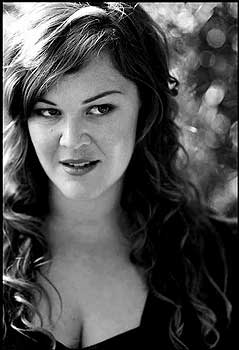
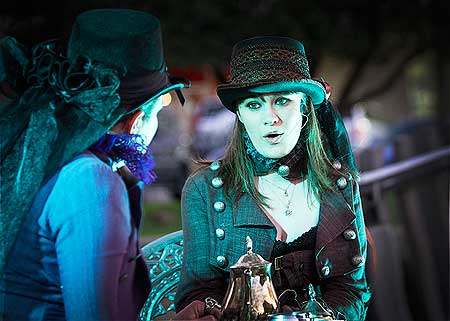
Director and Massey artist in residence Vanessa Stacey and A scene from ‘The Tempest’
Summer Shakespeare ‘not to be missed’
Record crowds have attended the first Summer Shakespeare shows in The Square. Reviewers have also raved about The Tempest production, calling it “a theatrical experience not to be missed”. Director and Massey’s artist in residence Vanessa Stacey says the cast and crew are delighted with the reaction from the first shows. “I’m buzzing. The cast are glowing, they are just killing it.” More than 360 people attended the first show, with Saturday night “crazy with 450 people” and another 360 on Sunday.
Ms Stacey says the annual production has always had a loyal following but this time she wanted to engage with youth and “shake things up”. The show is in the style of a steampunk rock opera – and her ambition has paid off. She says while the reviews have been fantastic her favourite response was from a group of teenagers that told her the production was “choice and better than TV”. The new location in The Square – after ten years in the city’s Victoria Esplanade – also encouraged people who normally wouldn’t attend a Shakespeare play to come along, or stop and watch as they walked by.
Ms Stacey praised her talented cast and crew for their hard work and enthusiasm and thanked the community for its support. “It’s really lovely doing community theatre and doing it with people who love it. It’s been inspiring for me and reignited my passion.”
The final shows will be held on Friday and Saturday this week.
Last year’s Summer Shakespeare production of Much Ado About Nothing won four awards this month at the Globe Theatre Awards Night in Palmerston North including best production and best direction.
Blue balloon dream a winner for Massey playwright
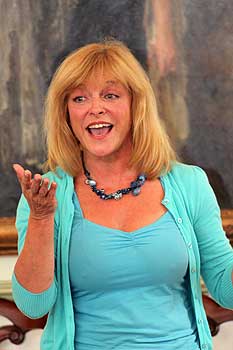
Associate Professor Angie Farrow
Blue balloon dream a winner for Massey playwright
A short play involving the magical, transformative qualities of a blue balloon, by Massey University’s Associate Professor Angie Farrow, has won first prize in a Canadian international playwriting competition.
Dr Farrow, who teaches drama and creative processes in the School of English and Media Studies at the Manawatu campus, took out first prize in the Toronto-based InspiraTO Theatre Contest last week.
Her 10-minute play, The Blue Balloon, was selected from among 400 entries worldwide.
The play – metaphorical and surreal – is about a relationship breakdown, and sees the grieving male protagonist releasing a blue balloon that engulfs his city and its inhabitants. The balloon is a liberating presence, prompting characters to think, say, feel and do things they hadn’t thought possible.
The story, inspired by a writer Ronald Bartlheme’s The Red Balloon and influenced by the likes of Irish playwright Samuel Beckett, takes an imaginative punt on the existential notion of how to free the human psyche so it can revel in pure visionary, expressive wonder.
“The blue balloon is a metaphor and is antidote to the usual constraints, rules and conventions that prevent us being more expansive, and more truly alive,” she says.
Dr Farrow says she loves the idea of short theatre tackling bold, challenging ideas in a short space of time. And she reckons the short play might be entering its heyday, with busy lives and short attention spans demanding artistic satisfaction in smaller chunks.
Describing short plays as “haiku theatre where you say big things in small spaces,” she says her success is particularly pleasing because there are so few competitions for playwrights.
“It’s a frustrating area in that sense. There are dozens of competitions for short stories, but for theatre there are very few – they are like gold,” says Dr Farrow, who has written 10 short plays, including prize-winners such as Tango Partner, Falling and Lifetime.
The Blue Balloon will premier in New Zealand in Palmerston North’s Darkroom Theatre on April 15 as part of a showcase of six of Dr Farrow’s short plays, and the week after at Wellington’s new Bats Theatre. It will be staged in Toronto in June as part of the InspiraTO Theatre Festival.
Worlds of man, beast and bird explored in theatre

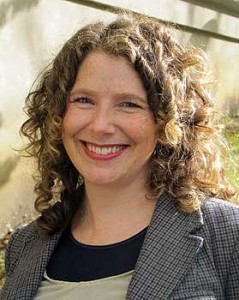
Amanimal– Knothead, a character from Amanimal played by Paul Young; and Dr Emma Willis.
Worlds of man, beast and bird explored in theatre
The boundaries and bonds between humans, animals and their environments are explored in an inventive new dance theatre show, Amanimal, created by Massey University lecturer in theatre Dr Emma Willis. She devised the work with noted choreographer Malia Johnston. Amanimal opens this week at Q Theatre as part of Auckland’s Fringe Festival.
It features three men: dancers Ross McCormack and Paul Young, and musician Eden Mulholland, who explore themes of survival, change and transformation through movement, text, song and image. The performers inhabit different forms – from birds, to men, to strange creatures – as they negotiate an ever-changing landscape, says Dr Willis, who teaches in the School of English and Media Studies at the Wellington campus. Describing the world of the work as “richly infused with comedy and absurdity and well as lyrical imagery,” she says the environment is central to the work and is looked at from multiple angles.
“I wanted to build tension within the scenes and sequences by focusing on how beings create and reflect their environment.”
“The work also looks at the point at which two things merge, becoming one before separating and evolving into something different again. ‘You’ and ‘I’ are uncertain, interchangeable and fraught. Over and over the performers have to find ways of being together, of jointly inhabiting and negotiating the unsteady topography,” she says.
Amanimal is running as a doublebill with Terrain – the works share the same designer John Verryt, and choreographer Malia Johnston – from February 26 to March 2.
Willis and Johnston’s previous work, Body/Fight/Time was performed at newly built Q Theatre in Auckland in October 2011. New Zealand Herald reviewer Raewyn Whyte wrote, ‘[Body/Fight/Time] is a fully integrated whole, with highly memorable mood-setting songs, compelling video portraits and sequences which interweave seamlessly with the dancing. Dark Tourists, their first collaboration, won the Wellington Fringe Festival Best Dance award in 2008. Dr Willis has previously devised, scripted and directed a number of new New Zealand plays in Auckland and Wellington, including The Swimming Lessons and Never Never by Jackie van Beek; and Milk (Best Theatre Work 1998 Wellington Fringe Festival), Flood (Most Original Production 2000 Chapman Tripp Theatre Awards), Fever and A Perfect Plan (nominated for three awards at the 2002 Chapman Tripp Awards).
She has also written and directed two radio plays for Radio New Zealand, The Fat Man (adaptation of a Maurice Gee novel) 2003; and Milk, completed in 2005.
She is currently working on a monograph for Palgrave Macmillan, Absent Others: theatricality, dark tourism and ethical spectatorship, which is to be published in 2014.
New theatre lab a hub for community stories
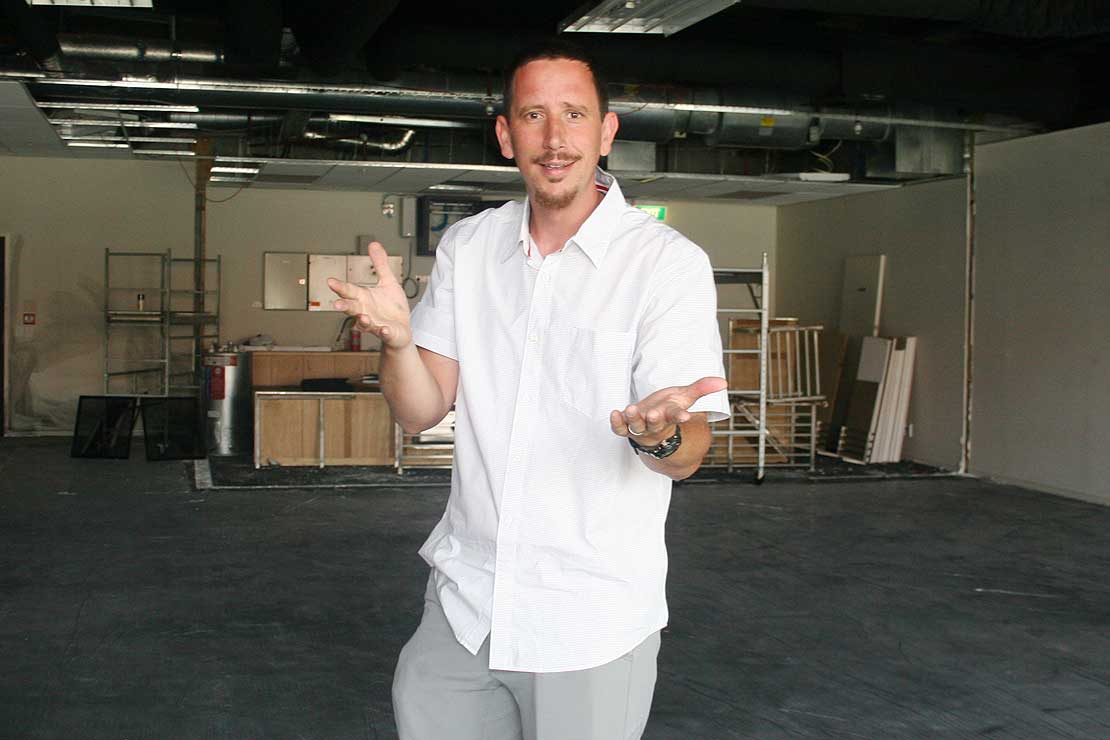
Caption: Dr Rand Hazou, at the Albany campus’ new Theatre Lab to open next month.
New theatre lab a hub for community stories
Growing up in Jordan across the valley from the troubled West Bank has given Palestinian-Kiwi theatre-maker Dr Rand Hazou a unique perspective on the role of theatre in telling marginalised stories. It’s a theme the scholar is keen to explore in the context of ethnically diverse Auckland at the University’s Albany campus. He bucked the migration trend and moved here from Australia to take up the role, bringing a colourful mix of theatrical experiences – from a kid playing the youngest thief in the musical ‘Oliver’ and Shakespearian roles as a teen, to backstage manager in Jordan’s capital Amman for a political satire of Middle East leaders, then researching the role of theatre in advocating for asylum-seekers’ rights in Australia for his PhD.
As the new champion of the Expressive Arts programme in the College of Humanities and Social Sciences, Dr Hazou wants students across academic disciplines to take part in and create cutting-edge theatre. A custom-made Theatre Lab is currently under construction inside the Sir Neil Waters building, to be launched at the end of March. Theatre workshops, performances and artists’ talks are in the pipeline.
“Theatre programmes in universities around the world are constantly battling against shrinking budgets and classes, and here it’s expanding which is really exciting,” he says.
Dr Hazou is especially interested in the role of documentary theatre as a way of connecting with a community, and in the idea of tapping into untold true stories within communities.
“Documentary theatre is about storytelling,” he says. “I’m really interested in finding out what makes this local community tick, producing students who are creative, and engaged with their local community as well.”
His doctoral thesis, which he did at La Trobe University, Melbourne, explored potent examples of how documentary theatre was being used to tell the stories of asylum seekers. Titled Acting for Asylum: Asylum Seeker and Refugee Theatre in Australia 2000-2005, he examined how the traumatic experiences of asylum seekers held in remote detention centres in Australia were told through theatre. The main source of public information about asylum seekers on hunger strikes and rioting was from a government slant via the media, he says. “It was shocking stuff.”
“What was amazing was the theatre response. Actors, directors and ordinary people who were hearing what was going on started contacting groups with access to the detention centres, and going in to befriend these asylum seekers,” he says. “They would write down their stories, and make performances. During this period we had a renaissance of political, documentary theatre in Australia.”
Asylum-seekers’ stories of perilous escape and life in detention centres were turned into scripts and posted on websites so that community theatre groups could download and stage them. During his research he documented 35 new performances about asylum seekers, with some staged numerous times. He also spearheaded the Harakat Project involving Palestinians in Australia – supported by the Australia Council for Arts. Still a work in progress, he hopes to stage it in New Zealand. Again in the documentary theatre mode, it delves into the issue of interrogation, inspired by a New Yorker magazine article. He may straddle two cultures, but for Dr Hazou being Palestinian is at the core of his sensibility towards other marginalised peoples. He grew up in an international community and bi-cultural family, the second of three sons of a Kiwi mum and Palestinian father whose family left Jerusalem in 1947 just before the 1948 Arab-Israeli war.
His father, Tuma Hazou, a radio announcer for the BBC World Service in London, found himself a war correspondent when he bought a camera and returned to Jerusalem to make a documentary about the old city when war broke out in 1967. Mr Hazou met his Kiwi wife Virginia later when he was working for the Hashemite Royal Palace where she was working as a trained nurse and nanny. New Zealand was an exotic faraway place from a Jordan perspective but Dr Hazou’s maternal heritage allowed him to spend a year here as a five-year-old, and again for several months as a high school student during the Gulf War.
As a child, he recalls viewing the West Bank and the lights of Jerusalem from across the Jordan Valley. He didn’t visit the city of his forefathers until he was 21, and has been back several times to Jerusalem and the West Bank, though never to Gaza. As a member of the Palestinian diaspora – estimated at around five million, or half the total population – he believes Palestinian refugees “should be allowed to return and live in peace side by side with Israeli neighbours. Many in refugee camps dream of this.”
But he feels it would be condescending to suggest theatre could heal conflicts as deep as the Arab-Israeli one. “It’s more complicated than this. The idea that people don’t understand each other is false. They just have very deep grievances.
“The theatre that I’m interested in is more about raising questions than solving, or having any therapeutic effect. Provoking people – not just across cultures, also Palestinians, about they how they perceive themselves.”
When it comes to teaching drama at university, he believes theatre skills are highly relevant to a broad range of professions, from business to health, teaching, science and media. “The type of skills you learn in theatre – engaging people, using your voice confidently, physical communication, listening – you can apply in any chosen career. I’m hoping there will be room to cater to people from other disciplines, not just actors.”
Theatre, he says, can also transform and enhance people’s experiences of living in an urban environment. So his drama dreams are likely to spill over into skate parks, beaches and shopping malls, because for Dr Hazou, all the world’s a stage.
Welcoming Mel Edmon
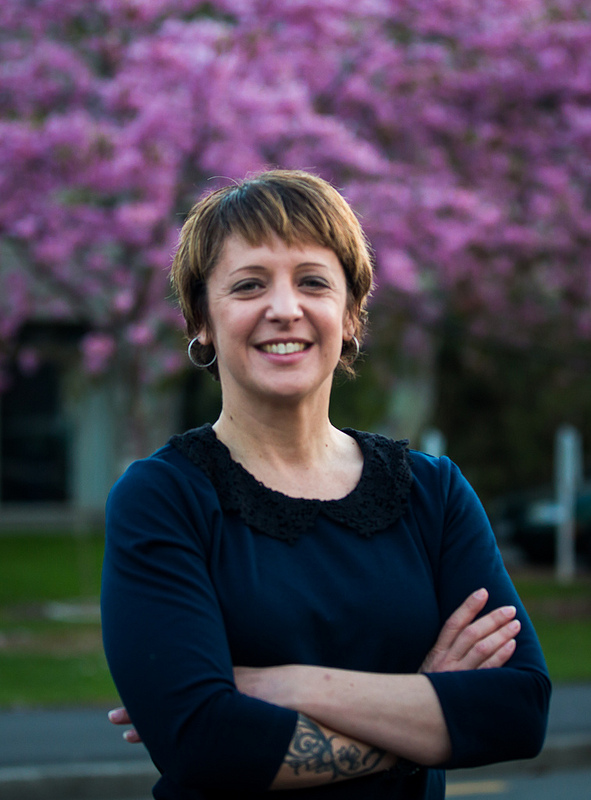 On Friday 23rd August Massey formally welcomed artist-in-residence Melissa Edmon at the Turitea Campus. Our 29th visiting artist on the successful and popular scheme, Mel is a renowned documentary filmmaker (see her Vimeo page for examples of her amazing work) and a senior lecturer and programme coordinator at UCOL’s School of Photography, Arts and Design in Palmerston North.
Whilst at Massey, Mel is intending to make a short fiction film, entitled Are You Happy? which will involve Massey media production students as crew members, allowing them to experience working on a professional film set first hand. Mel has also already given guest lectures and workshops on the Creative Communication and Media Practice II papers at Palmerston North.
We’re thrilled to have Mel with us and look forwards very much to working with her over the coming months.